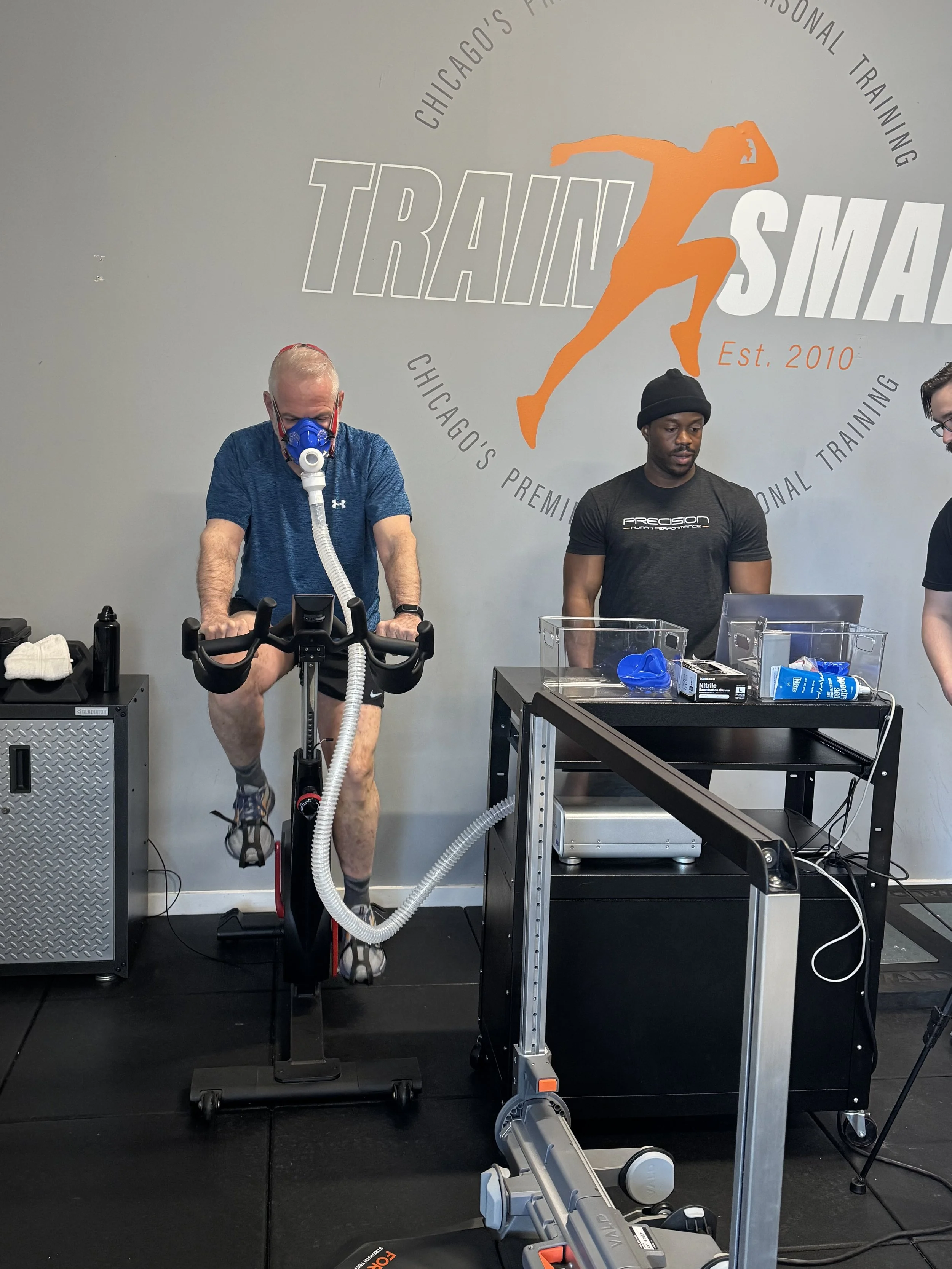
Stop Guessing. Start Training Your Heart with Intention.
Stop Guessing - Start Training Your Heart with Intention. by Michelle Amore
When we talk about heart health, most people think about cholesterol, blood pressure, or family history. But there’s another powerful predictor of cardiovascular health that often gets overlooked: VO₂max.
VO₂max—your maximal oxygen uptake—measures the maximum amount of oxygen your body can use during intense exercise. It reflects how efficiently your heart pumps blood, how well your lungs deliver oxygen, how effectively your blood carries it, and how capable your muscles are at using it. In simple terms, it tells us how strong and efficient your cardiovascular system truly is.
Research consistently shows that cardiorespiratory fitness is one of the strongest predictors of longevity and reduced cardiovascular disease risk. Low VO₂max is associated with higher all-cause mortality—even more than many traditional risk factors. This isn’t just a performance metric for athletes. It’s a vital sign for long-term health.
The problem? Most people train their heart blindly.
They take classes. They jog. They sweat. They watch their heart rate. But without knowing their true physiological capacity, they’re guessing. Generic heart rate charts and app-based zones are built on population averages—not your individual biology. That’s why so many people get stuck in the “gray zone”: working moderately hard, but not easy enough to build a true aerobic base and not hard enough to meaningfully improve their ceiling.
A proper VO₂max test changes that.
During a graded exercise test with metabolic analysis, we identify your true VO₂max along with key thresholds that show where your body shifts from easy aerobic work to harder, less sustainable effort. From this data, we establish individualized training zones based on your physiology—not a formula.
Instead of memorizing five technical categories, here’s what really matters:
Lower-intensity zones build your aerobic foundation. They improve stroke volume, mitochondrial efficiency, fat metabolism, and long-term durability.
Moderate zones improve your ability to sustain effort and clear metabolic byproducts.
Higher-intensity zones raise your threshold and increase maximal cardiac output—expanding your overall capacity.
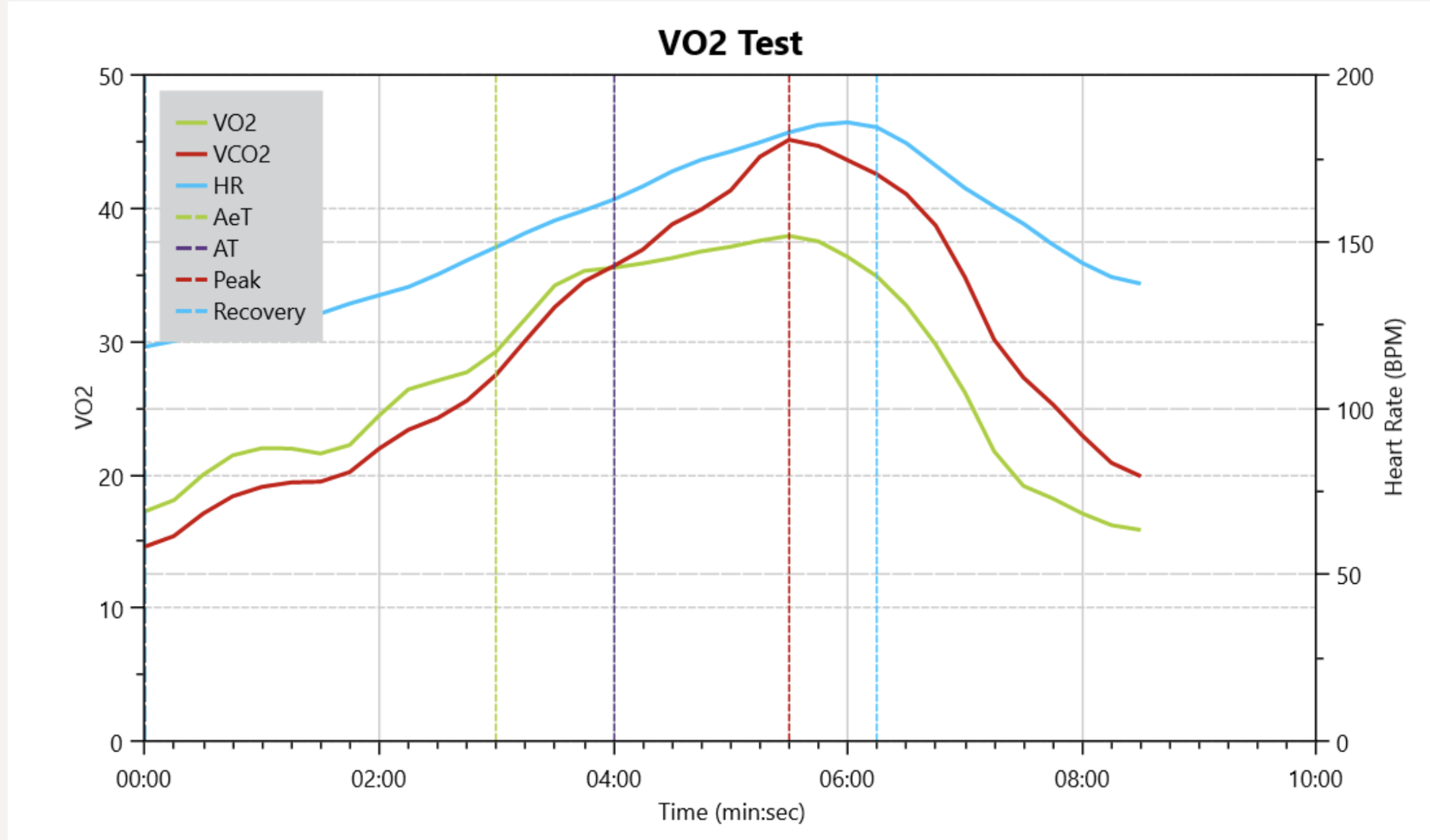
Each zone produces a different adaptation. When you train with intention, you place stress where it belongs and allow recovery where it’s needed. That’s how the heart becomes stronger and more efficient over time.
Individualization is everything. Two people can have the same VO₂max number but reach their aerobic threshold at very different heart rates. If both follow a generic “Zone 2” recommendation, one could be undertraining while the other is overstressing their system. Only proper testing reveals where your true aerobic base and performance thresholds actually live.
Once your zones are established, your cardio plan becomes precise. You may spend several sessions each week strengthening your aerobic engine, layer in targeted threshold work, and strategically add VO₂max intervals. As your fitness improves, your zones shift upward—meaning your heart performs better at every level of effort.
From a longevity perspective, improving VO₂max is one of the most powerful investments you can make in your future health. Not prioritizing your cardiorespiratory fitness is like not saving for retirement — you’re ignoring one of the biggest investments in your future. Higher VO₂max is associated with lower cardiovascular risk, improved metabolic health, reduced inflammation, better cognitive resilience, and decreased mortality risk.
The goal isn’t just to chase a bigger number. It’s to build a resilient cardiovascular system that supports you in sport, in daily life, and as you age.
If you truly care about heart health, “just doing cardio” isn’t enough. You need to know where easy should be, where hard should be, and how to train each with purpose.
Stop guessing.
Start training your heart with intention.